Building Innovation and Eco Design
The original cottage - where it all began
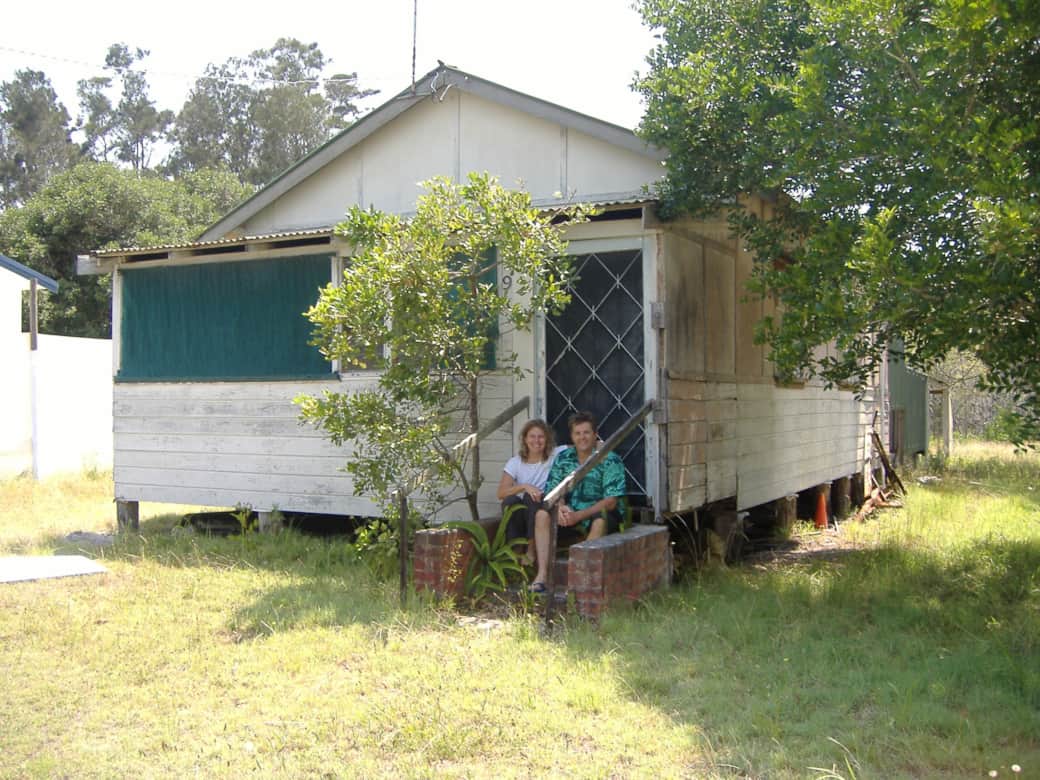
That's us on the steps of an old fibro fishing cottage we'd just bought — barely standing, overgrown, and completely full of potential.We didn't buy it despite what it looked like. We bought it because of what we could see.Crescent Head had captured us the way it captures everyone — quietly, completely, and without asking permission. The point break. The creek. The kind of stillness you forget exists until you're back in it.
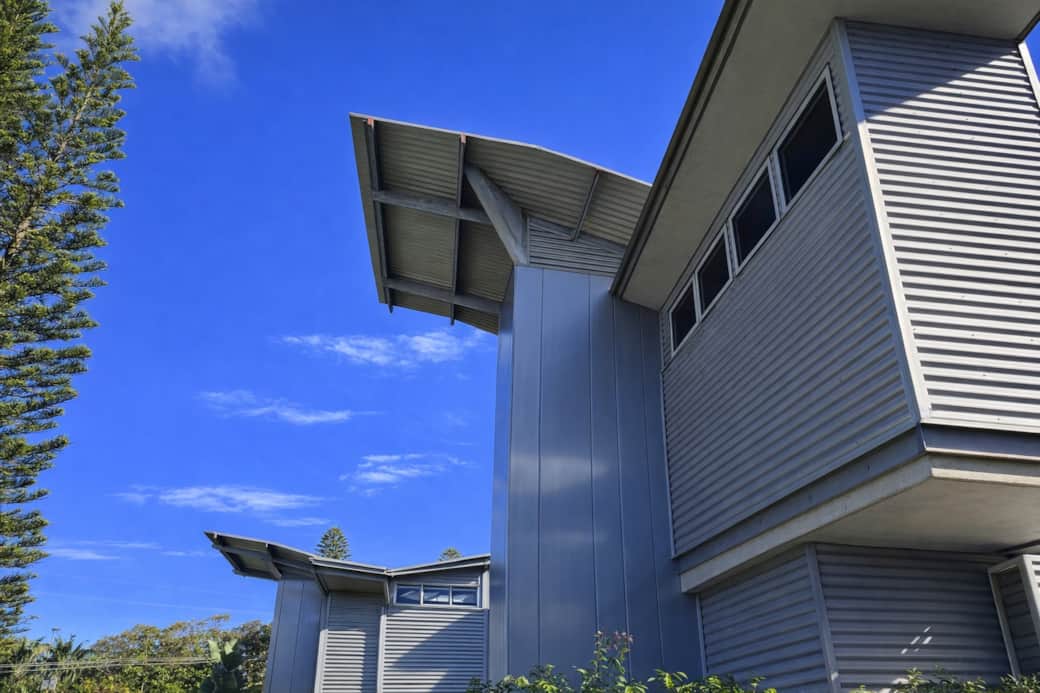
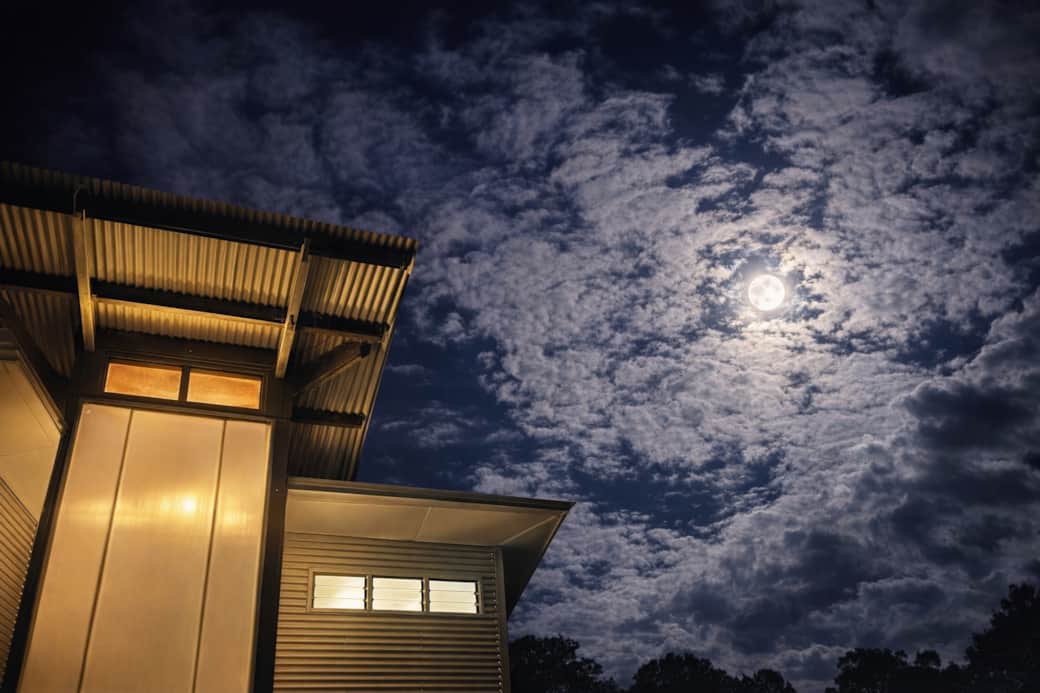
What followed was years of research, architecture, and a genuine obsession with building something that belonged here. Rammed earth walls sourced from local sandstone. Passive solar design calculated to the exact latitude and longitude. Polycarbonate that breathes light through the building. A solar chimney that pulls the sea breeze through the rooms.We wanted a building that would still make sense in 100 years.
Nearly two decades later, it has welcomed hundreds of families, surfers, honeymooners, and people who just needed to stop for a while.
How Fishers was built
Most beach houses are built fast — frame, cladding, paint, done. Fishers wasn't.
It's one of five villas in a small architecturally designed development on the NSW Mid North Coast, built around a single idea: that a coastal home can be deeply comfortable, beautifully crafted, and gentle on the place it sits in.
Here's what that looks like in practice.
The walls
The walls of Fishers are rammed earth — 92% local sandstone and 8% cement, layered and compressed by hand, no paint required. The earth came from a quarry near Port Macquarie. The colour came with it.
Rammed earth is rare on the NSW east coast. It's far more common inland and across to Margaret River, where the technique has had a quiet revival. Here at the coast, the walls do something special: combined with the upper and lower concrete slabs, they create a thermal mass that absorbs the day's warmth and releases it slowly through the night. The villa stays cool through summer afternoons and warm through winter mornings.
The rammed earth also does the design work. There's no plasterboard, no render, no feature walls — the earth is the finish. Run your hand along it and you can feel the layers.
The way it breathes
Fishers is oriented to the sun. The eaves are calculated for this exact latitude — long enough to block the high summer sun, short enough to let the low winter sun stream in. A solar chimney at the roofline draws warm air up and out, pulling cooler air through low vents at the base of the building. In winter, those base vents close, and the polycarbonate panels along the upper walls capture heat through the day.
It's a system that works without buttons or thermostats. The villa breathes by design.
Water and power
Rain that falls on the five villas is collected into a 35,000-litre tank and reused for toilets and gardens. Hot water is heated by Apricus solar tubes on the roof — the building's orientation is optimised for them. Solar panels generate electricity that's fed back into the grid; across the year, the villa's energy use comes close to net neutral.
Where things came from
The bones of the villa are local where possible. Sandstone from Bonny Hills. Floor stone from Nambucca. Hardwood from the Macleay Valley. Structural pine from sustainable Australian forests. Steel and aluminium from Australian manufacturers (BlueScope, Capral). Insulation made from recycled milk bottles, sourced in Brisbane. Polycarbonate from Danpalon — 100% recyclable, with recycled content already in the mix.
Painted surfaces are minimal. Most of what you can see and touch is the material itself.
Why it matters
You don't need to know any of this to enjoy Fishers. The walls just feel cool on a hot day. The light through the polycarbonate softens and shifts with the weather. The spa is full of rainwater. The power bill is small.
But if you do care how a place was made — if you've ever stood in a beach house and felt the air conditioner working overtime against bad design — Fishers is built the other way.